Care · 6 min
How to Store Jewelry: A Simple Guide for Plated and Silver Pieces
Updated
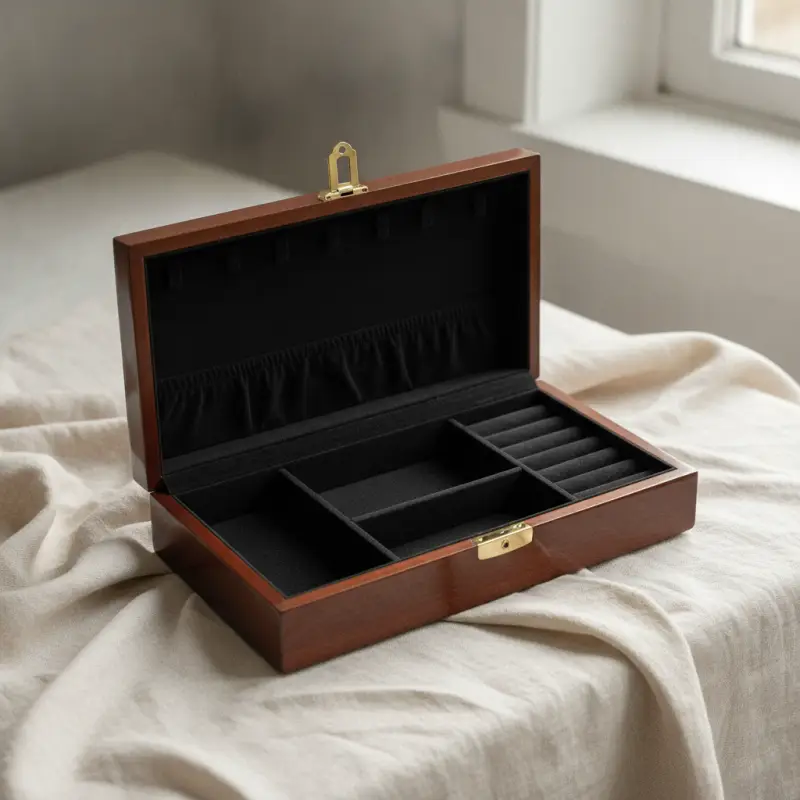
The best way to store jewelry is to keep each piece clean, dry and separate, in a closed space away from humidity and direct sunlight. Use a lined jewelry box with compartments or individual soft pouches, close necklaces so they do not tangle, and keep everything out of the bathroom.
For sterling silver and gold plated jewelry, limiting air exposure makes the biggest difference. Small zip bags with the air pressed out and an anti tarnish strip in the box help slow tarnish and protect the plating between wears.
Why storage matters so much
Most jewelry damage happens when we are not wearing it. Pieces tossed together in a dish scratch each other, chains knot, and humid air reaches silver and plated metal for hours every day. Gold plating is a thin layer, so a scratch from a harder piece or a clasp can wear through it faster than normal use would.
Good storage solves three problems at once: physical damage (scratches and tangles), chemical damage (tarnish and oxidation) and loss (the earring that disappears from the nightstand).
Golden rules for storing any jewelry
These basics work for almost every type of piece:
- Clean and dry before storing: wipe off sweat, lotion and makeup with a soft cloth.
- One piece, one space: avoid metal touching metal.
- Keep it closed: a box with a lid, a drawer or a pouch limits air and dust.
- Keep it dry: never in the bathroom, and away from windows that get condensation.
- Keep it out of the sun: heat and light can affect some stones, pearls and finishes.
How to store gold plated jewelry
Gold plated pieces, including Brazilian semi-jewelry, benefit from soft, individual storage. A fabric pouch or a velvet lined compartment protects the gold layer from scratches. If you live in a humid area, a small zip bag with the air pressed out adds protection, since the base metal under the plating can react with moisture if the gold has thin spots.
Avoid storing plated pieces mixed with heavy silver or steel pieces that can scratch them, and never put them away damp after the beach or a hot day.
How to store sterling silver jewelry
925 sterling silver tarnishes when it meets sulfur and humidity in the air, so the goal is to reduce air exposure. Individual zip bags or anti tarnish pouches work very well. Add an anti tarnish strip or a small silica gel packet to the box or drawer and replace it as directed on the package.
Keep silver away from rubber bands, wool and regular cardboard, which can contain sulfur and speed up tarnish. If you wear the same silver pieces daily, a small closed dish on the dresser for those favorites is fine, as long as they are dry.
Necklaces, earrings, rings and bracelets
Each type has its own trick:
- Necklaces: close the clasp and hang them, or lay them flat in a long compartment. For travel, thread one end through a straw to prevent knots.
- Earrings: use a card or an organizer with holes so pairs stay together and posts do not bend.
- Rings: ring rolls or slotted trays keep them upright and apart.
- Bracelets: lay rigid bangles flat or stack them on a soft roll; keep chain bracelets closed like necklaces.
- Pieces with pearls or delicate stones: store them flat in a soft pouch, away from other jewelry.
Travel cases and jewelry boxes
A small travel case with separate compartments is the easiest option. If you do not have one, use individual zip bags or a pill organizer for earrings and rings. Pack jewelry in your carry on bag rather than checked luggage, and do not wear plated pieces in hotel pools or hot tubs, where chlorine can damage them.
You do not need an expensive box. What matters is a soft lining, separate compartments of different sizes, a lid that closes well and, ideally, hooks or a long section for necklaces. Drawer inserts with small slots are a great option if you prefer to keep jewelry out of sight, and stackable trays let the collection grow with you.
If you already have a box without lining, small fabric pouches inside each compartment solve the problem. For silver, look for boxes or pouches labeled tarnish resistant, or simply add an anti tarnish strip. Keep the box in a cool, dry spot, such as a bedroom dresser or closet shelf.
Mistakes to avoid
The most common ones are keeping jewelry in the bathroom, leaving everything in one open dish, storing pieces right after sweating, and using old cardboard boxes as long term storage. A few minutes of organization can add a lot of life to your favorite pieces.
At KJ we offer Brazilian semi-jewelry and 925 sterling silver, and if you have questions about how to store or care for a specific piece, you can message us on WhatsApp.
Frequently asked questions
Is it bad to store jewelry in the bathroom?
Yes, it is one of the worst places. Showers create humidity that speeds up tarnish on silver and can affect the base metal under gold plating. A bedroom drawer or a closed box is much better.
Should I store jewelry in plastic bags?
Small zip bags with the air pressed out work well for silver and plated pieces because they limit air and humidity. Make sure the piece is clean and completely dry before sealing it.
How do I keep necklaces from tangling?
Close the clasp, then hang the necklace or lay it flat in its own space. For travel, run the chain through a straw or wrap it around a soft piece of cardboard before putting it in a pouch.
Can I store gold plated and silver jewelry together?
They can share a box, but it is best to keep each piece in its own compartment or pouch so harder pieces do not scratch the gold layer.
Where is the best place to keep a jewelry box?
A cool, dry and dark place, such as a bedroom drawer, dresser or closet shelf. Avoid bathrooms, windowsills and spots near heaters or air vents.
Keep reading